For as long as we've had software, we've bent ourselves to fit it. We pick the app that does most of what we need, work around the rest, and accept that it was built for someone else's average.
AI coding tools change that. If a tool doesn't quite fit, you can now change it or build your own, often in an afternoon and without being an engineer. And it doesn't have to last. A tracker for one trip, a calculator for one decision, an app for one project. Software used to be too expensive to build for a short-lived need. Now you can build it for as long as you need it, then retire it.
Two I built for myself
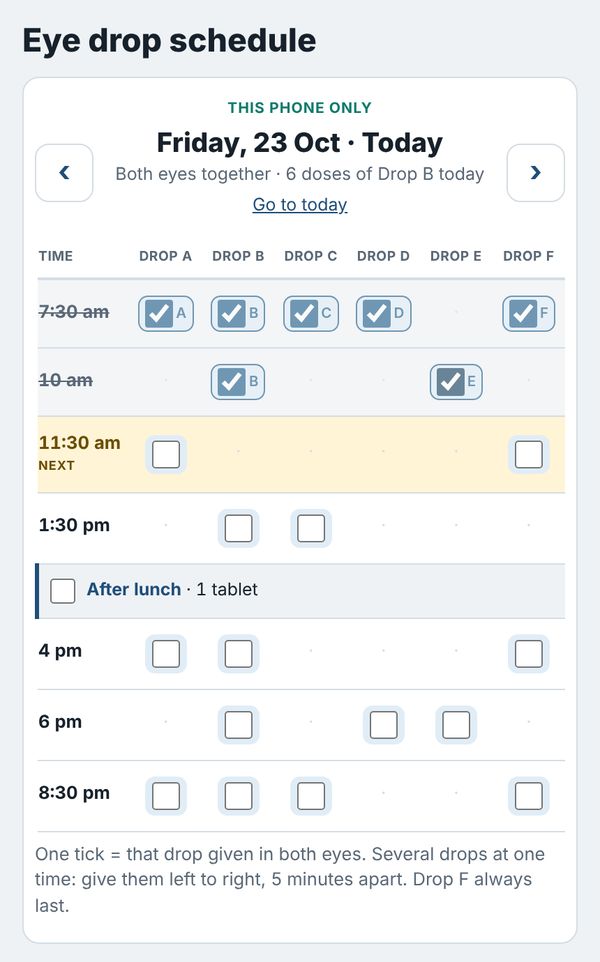
The first was an eye-drop schedule. After eye surgery, a family member was prescribed six different drops on a schedule that changed every few days, plus a daily tablet. No pharmacy app could handle it. In one conversation with Claude I built a tracker for the phone: pick a day, see every dose by time, tick it off, and the next dose is highlighted. It handled the move from per-eye to combined doses, the tapering, and a few last-minute changes from the doctor. When the course ends, it gets retired, and that's the point.
The second was a fitness tracker built around my own training. I pick my split, like push, pull and legs, and each day it shows what I trained, for how long, calories and heart rate, and what to do next. It also tells me what to skip: after back and biceps one day and chest the day before, it steers me to legs or rest. Generic fitness apps track everything except the question I actually have every morning, which is what should I do today. It has since grown into TrainWise, now on the App Store. That story is in Voice, part two.
Made for one, useful to many
Something built for one person's need rarely stays with one person. Others with the same need can use it too, so software can now spread from a real need instead of a market. For those of us who make products, that raises the bar. "Good enough for most people" isn't enough when people can build exactly what they need. And while anyone can make an app now, making one that's reliable, accessible and safe with your data is still the hard part.
Idea, argument and outline by Amit Dangwal. Drafted with the help of Claude.