Essay
Feed the repo, not the prompt
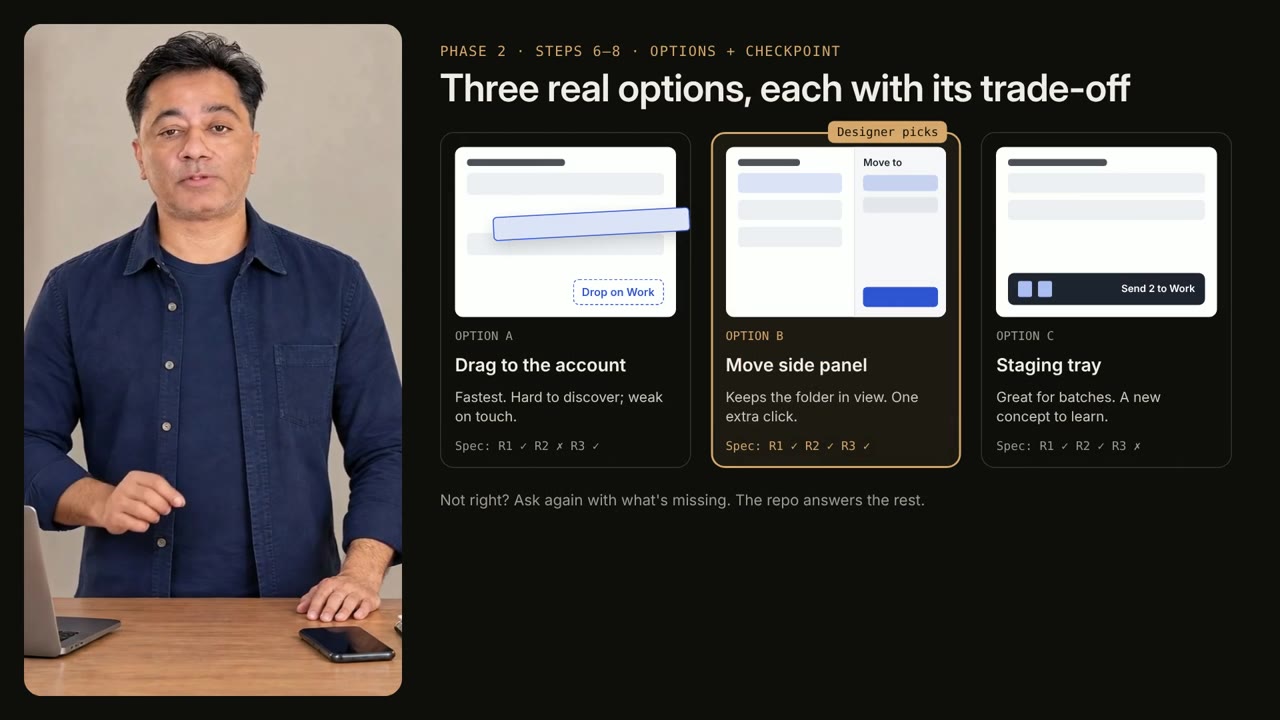
AI-generated video. My voice, my words. Watch on YouTube
When I watch design teams use AI, I see a lot of typing. Long prompts, prompt libraries, the one person on the team who's "good at prompting". Then a screen comes back that looks fine and is wrong in ten small ways. It misses the edge case the spec called out, invents a component we don't have, or solves a problem the business never asked about.
That's not the model's fault. We didn't tell it what we already know.
It's already written down
Every product team already has most of the answer for a new screen. It's in the business requirements, the product spec, the design language, the UI spec, and years of decisions made in reviews. A good designer carries most of it in their head. The model has none of it unless we hand it over.
So I'd rather build a good project repository than write a better prompt. Why we're doing this, what it has to do, how it should feel, what it's built from, and why we made the choices we made, including the ideas we already killed. Without that last part, the model will happily suggest the thing we rejected last quarter.
Dumping documents in a folder doesn't work, though. The model weighs everything the same and gives you the average. Keep one source of truth per question, because if two specs disagree the model just picks one. Give it text and code, like tokens, components and written rules, not screenshots. Write in scenarios, not screens. Write the reason down with each decision. And make someone own each part, because a stale repository is worse than none. It's confidently wrong.
One line and a sketch
With the repository in place, the input gets tiny. One line saying what you want, and a rough sketch saying where it goes: a new step in an existing flow, a new page, or one component on a page.
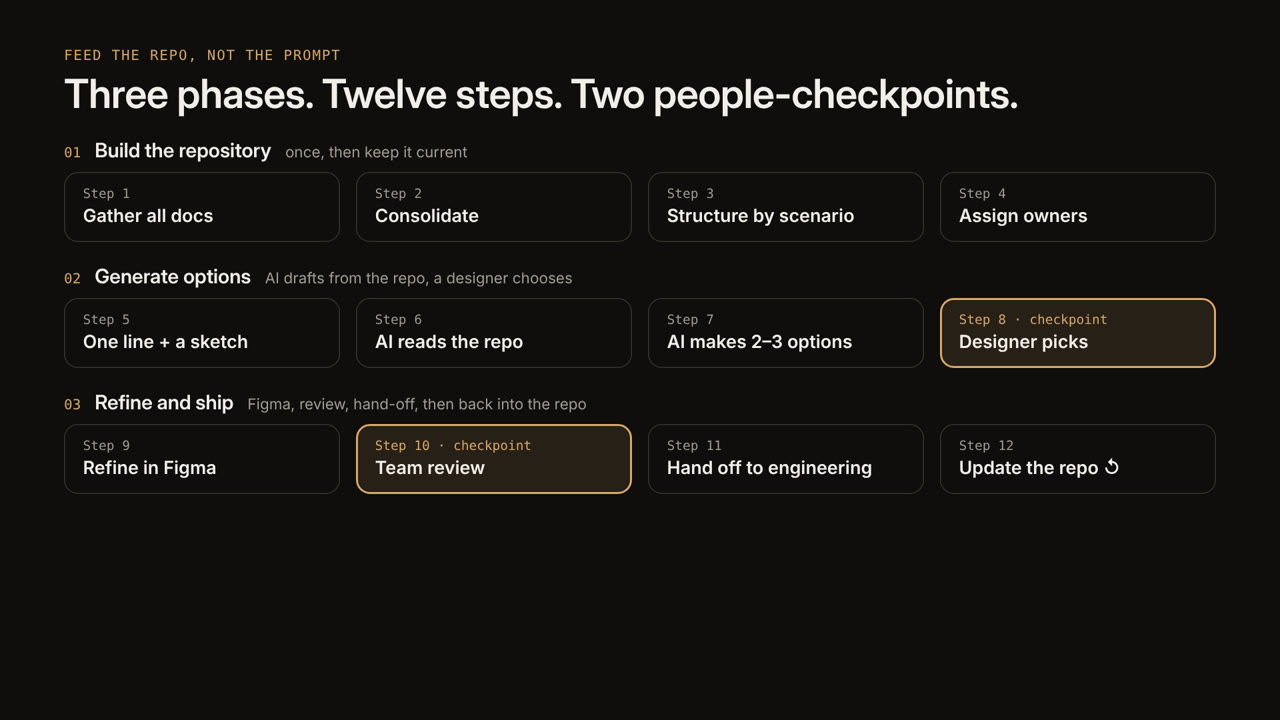
AI reads the repository first, then comes back with two or three different approaches, each built on our real system, each with its trade-off and a note on which rules it meets or breaks. Three is on purpose. One is a guess, and ten is too many to review properly.
Then a designer takes over. Pick one, merge two, or ask for another round. The chosen option gets refined in Figma, because the last stretch is still craft: the copy, the spacing, the states the model missed. Nothing goes from a prompt straight to engineering. After the team review, engineering builds it, and the decision and its reason go back into the repository so the next brief starts smarter.
What it changes
The designer's job doesn't shrink, it moves. Less making screens, more curating context and judging options. For design leaders, the repository becomes the team's standard in writing. Raise the bar there and you see it in every option.
It can still go wrong. The spec changes in a meeting and nobody updates the repo. The three options turn out to be the same idea. Everything starts to look like the average of what we've done before, and real invention still needs someone willing to break the system. Or nobody owns it. The fix for all of these is the same: treat the repository like a product, with an owner and a quality bar.
Idea, argument and outline by Amit Dangwal. Drafted with the help of Claude.